
The NYC Tower That Fakes 1,500 Colors With Clear Glass
Jean Nouvel's Chelsea tower has no color in its glass. Three Low-E coatings and tilted panes do the work.
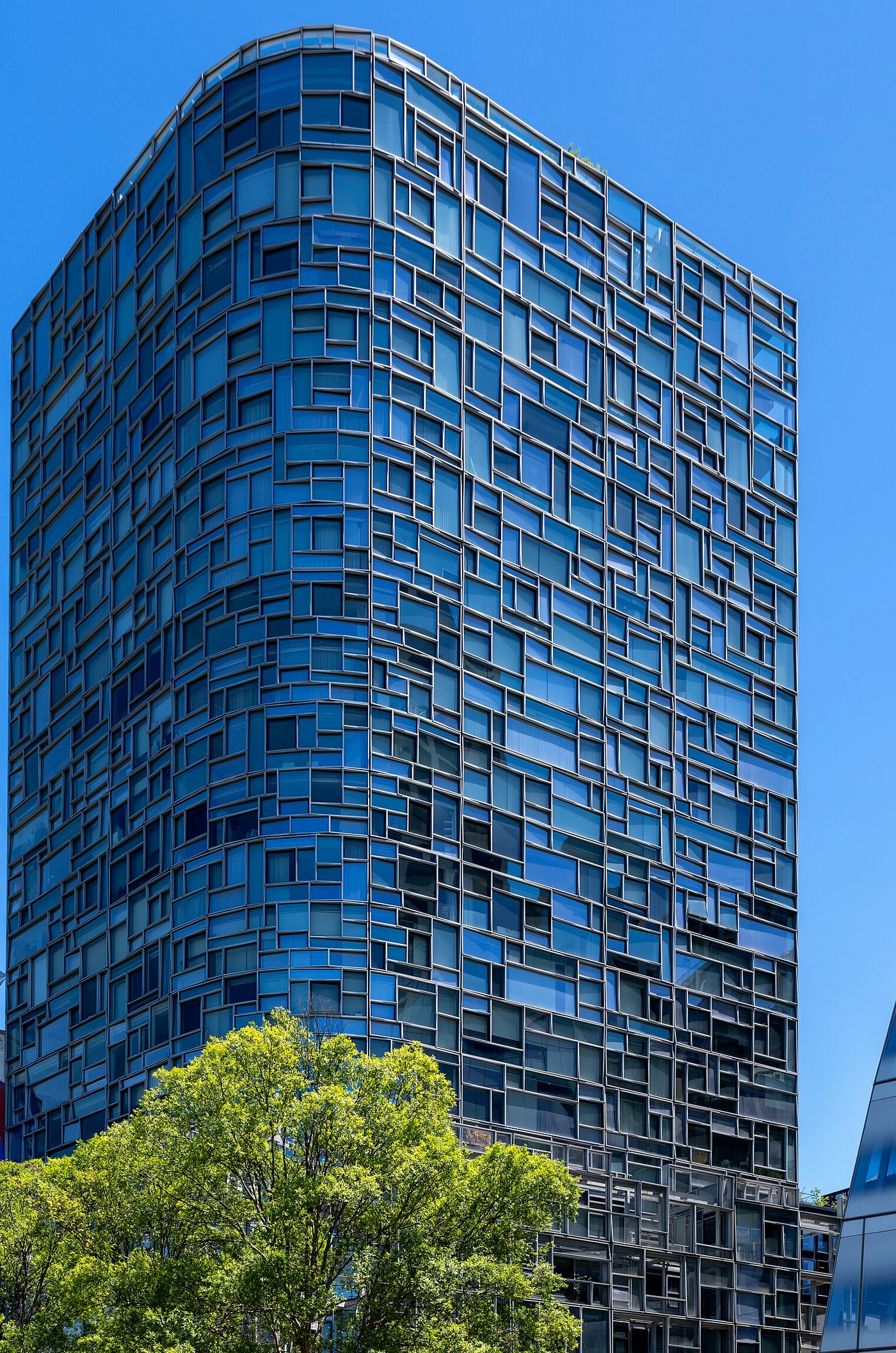
From the West Side Highway, 100 Eleventh Avenue looks like a painting. Blues, greens, grays and near-blacks, stacked in a patchwork of rectangles that seems to change as you walk past.
Jean Nouvel designed the tower with Beyer Blinder Belle. It was completed in 2010 on the corner of 19th Street, facing the Hudson (Wikipedia).
Here's the strange part. None of that color is in the glass.
Trick 1: Borrow a painter's idea

Critics reach for the same name when they describe this facade: Mondrian (CityRealty).
The comparison fits. Mondrian built whole paintings from a few kinds of rectangles, shuffled into layouts that never quite repeat. Nouvel's river-facing wall works the same way. It is made of large unitized "megapanels" holding about 1,650 windows of different sizes (Wikipedia).
A grid of rectangles is a strong start. But a painting needs paint.
But there's no color in the glass
Architect magazine reported that the glass is colorless (Architect). Stand inside and you look out through clear panes.
So where does the color come from? The surroundings. A facade on the Hudson has a lot to borrow from:
- the river, gray-green or silver depending on the light;
- the dark asphalt of the street below;
- the green trees along the waterfront;
- the sky, which changes every hour.

Identical windows would blend into one flat color
That creates a new problem. If every pane were the same glass, set the same way, they would all reflect the same thing. A thousand-plus windows would merge into one big mirror.
Reflections alone don't make a mosaic. Nouvel needed the panes to disagree with each other.
Trick 2: Three different Low-E coatings
The first way to make them disagree is the coating. Architect describes colorless glass with three shades of Low-E (Architect).

What Low-E actually is
Low-E means low-emissivity. It is a microscopically thin coating of metal or metal-oxide layers on one face of the glass (DOE FEMP).
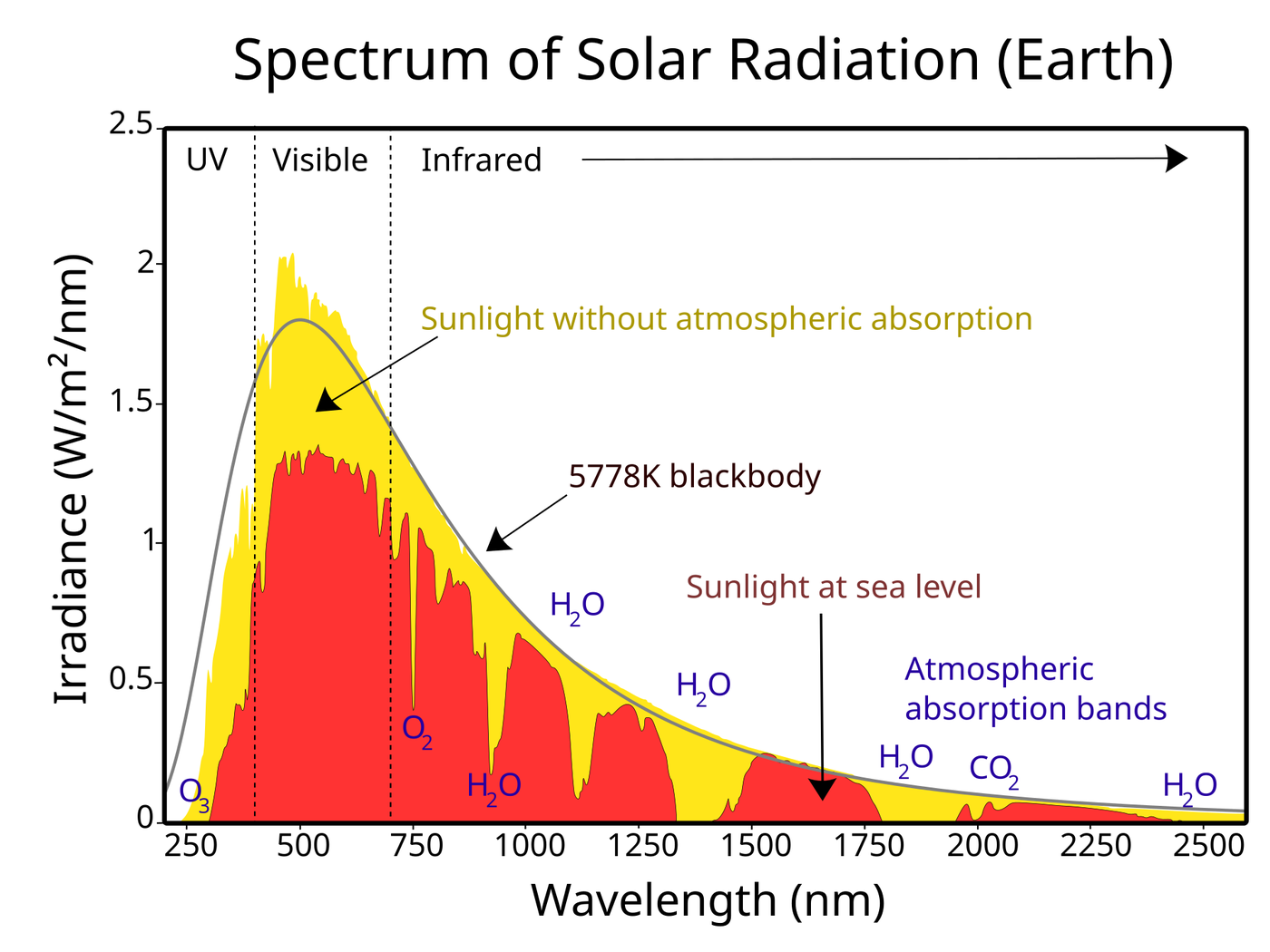
Its job is to sort light. Sunlight arrives as visible light plus a lot of infrared, which you feel as heat. A good Low-E coating lets most of the visible light through and pushes back much of the heat.
Three numbers, in plain words
Every Low-E choice is a trade between three numbers (DOE FEMP):
- U-factor: how fast heat leaks through. Lower means better insulation. That matters most on a cold night.
- SHGC: how much of the sun's heat gets in. It runs from 0 to 1. Low numbers keep a hot west wall cool. Higher numbers let a cold-climate room warm up in the sun.
- Visible transmittance: how much daylight gets in. Push it too low and rooms start to feel dim.
The more advanced coatings stack two or three silver layers ("double-silver" or "triple-silver"). They cut solar heat hard while keeping a lot of daylight (Efficient Windows Collaborative).
Even the side of the glass matters. In a double-glazed unit the surfaces are numbered from outside in. A coating on surface #2 keeps more solar heat out. A coating on #3 lets more in, which helps in heating climates (Pilkington ATS-193; DOE/NREL Measure Guideline).

Why each coating has its own tint
Here's the part that matters for 100 Eleventh. The metal layers that bounce back heat also bounce back a little visible light. Change the layers and you change how much is reflected and what tint it takes on. Some Low-E products look slightly tinted for exactly this reason (Efficient Windows Collaborative).
So three coatings means three slightly different reflections of the same river and sky. That is the energy spec doing the painting.
Three tints should mean three colors
There's still a catch. Three coatings on flat, aligned glass would give you three colors. The building would be striped, not alive.
Trick 3: Tilt every pane

Nouvel canted the windows. Each pane sits 2° to 5° off the plane of the wall, inside a stainless steel framework (Architect).
A few degrees sounds like nothing. But a mirror tilted even slightly shows you a different scene. Two neighboring panes with the same coating now reflect different patches of the city.
Trick 4: Point them in different directions
The tilt doesn't go just one way. Panes lean up, down, left or right (Architect).
- Tilted up, a pane catches the sky.
- Tilted down, it picks up the dark street.
- Tilted sideways, it grabs the river, the piers or the trees.
As the sun moves and clouds pass, each of those reflections shifts on its own schedule.
The payoff: 1,500+ ways to look different
The engineers at Front describe how the design was rationalized into a kit: 32 frame types, 3 types of glass, 4 angles and 4 directions (Front).
Multiply them out: 32 × 3 × 4 × 4 = 1,536 combinations. That is more than 1,500 ways for the same clear glass to look different, built from a controlled set of parts.
Nouvel called the building a "vision machine" (Architect; Building). It is a machine for looking out, and for being looked at.

The setting sharpens the point. Across the street is Frank Gehry's IAC Building (Wikipedia). It is white, milky and sail-like, an almost opposite use of glass. Side by side, the two buildings show how much the choice of glass decides what a building looks like.
What this means for your project
You probably aren't building a vision machine. But you are making the same choice Nouvel made, whether you notice it or not.
Low-E isn't only an energy number on a spec sheet. It sets how warm a room feels in July, how much daylight reaches the back of it, and how the facade reads from the street.
So choose it on purpose:
- Start with orientation. In warmer climates, east, west and south glass usually wants a low SHGC. In cold climates, south glass can take a higher SHGC to collect winter sun, and every side wants a low U-factor (DOE Guide).
- Check your code. Energy codes and programs such as ENERGY STAR set U-factor and SHGC targets by climate zone (ENERGY STAR).
- Look at real samples outdoors. View them in daylight, from several angles, against your actual sky. On most projects the goal is the opposite of 100 Eleventh: panes that match, so one elevation doesn't look patchy.